11 December 2025
Awards Presented at the International Future Scope Short Film Festival
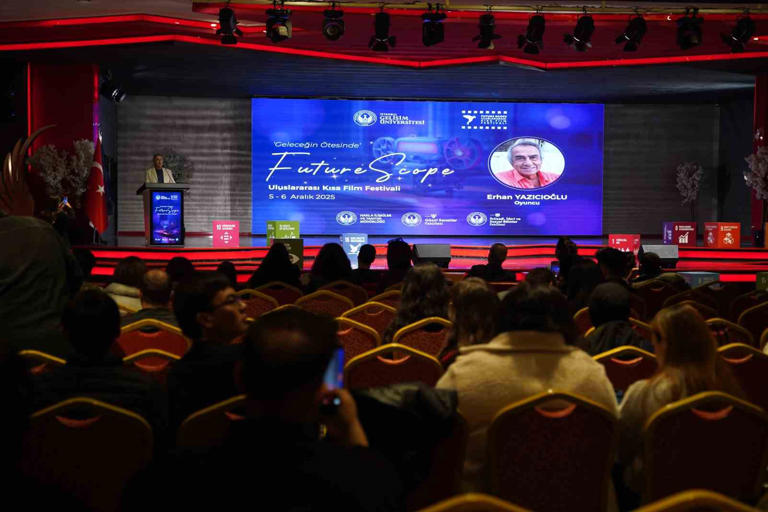
Hosted by Istanbul Gelisim University, the second International Future Scope Short Film Festival brought together young filmmakers, artists, and industry professionals from more than 27 countries, offering an intensive two-day program centered on cinema and sustainability. The festival featured short film screenings, workshops, panels, sustainability-focused study sessions, and an awards ceremony. With strong participation throughout, the event became a platform where young directors showcased creative narratives addressing global challenges.
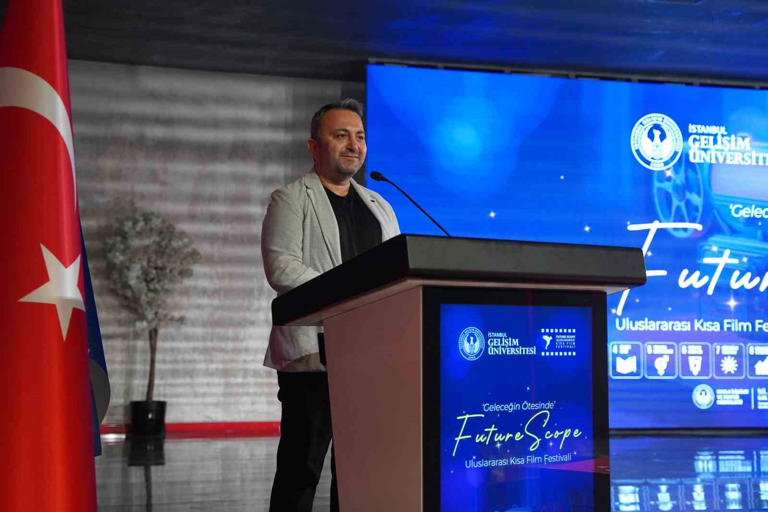
In his opening speech, Istanbul Gelisim University Rector Prof. Dr. Bahri Şahin emphasized that sustainability is not merely a technical environmental policy but a profound shift in human values. Şahin stated, “Today, the world exhibits a structure that has largely lost its sustainability. Wars continue, societies destroy their own futures. My message to the youth is clear: stand with the oppressed, not the oppressor; question, resist, and stay upright. Only then can true sustainability be achieved.” Highlighting cinema’s power to enhance social awareness, Şahin noted that the university embraces an integrated approach to artistic, technical, and social innovation through TEKMER, SATMER, and the soon-to-be-established SOSYOMER centers.
The first day of the festival began with Honor Awards presented to two prominent figures of Turkish cinema. Director Ezel Akay, unable to attend due to scheduling conflicts, sent a video message thanking the festival committee. His award was presented on his behalf to Dr. Öğr. Üyesi Ali Kemal Çipe by the Dean of the Faculty of Fine Arts, Prof. Dr. Güzin Ilıcak Aydınalp. Another Honor Award was given to veteran theater and cinema actor Erhan Yazıcıoğlu, who received his award from Rector Prof. Dr. Bahri Şahin following a special tribute video prepared by the festival team.
Ahmet Bikiç, Lecturer at the Department of Visual Communication Design, announced that the festival received 426 short film submissions from 27 countries this year. Bikiç emphasized that the addition of a high school category expanded the festival’s scope, enabling young participants to explore sustainability through their own perspectives during an intensive workshop process. Over the two-day “Sustainability Workshop,” students discussed the United Nations’ 17 Sustainable Development Goals and formulated their own solution-oriented statements. These statements will be shared with the public as “youth sustainability messages.”
This year, the festival accepted only films themed around sustainability. Submissions offered compelling narratives on climate crisis, social justice, inequality, environmental awareness, and social transformation. Awards were presented across six categories, while three high school films received Special Recognition Awards without ranking distinctions.
Participants expressed their appreciation for the workshops and screenings, noting the enriching experience. High school student Anastasia Myalik said, “We developed ideas in the workshop and met professional directors. It was an unforgettable experience for us.”
Future Scope once again solidified its role as an international platform where young filmmakers raise their voices for a sustainable future through the universal language of cinema.
The first day of the festival began with Honor Awards presented to two prominent figures of Turkish cinema. Director Ezel Akay, unable to attend due to scheduling conflicts, sent a video message thanking the festival committee. His award was presented on his behalf to Dr. Öğr. Üyesi Ali Kemal Çipe by the Dean of the Faculty of Fine Arts, Prof. Dr. Güzin Ilıcak Aydınalp. Another Honor Award was given to veteran theater and cinema actor Erhan Yazıcıoğlu, who received his award from Rector Prof. Dr. Bahri Şahin following a special tribute video prepared by the festival team.
Ahmet Bikiç, Lecturer at the Department of Visual Communication Design, announced that the festival received 426 short film submissions from 27 countries this year. Bikiç emphasized that the addition of a high school category expanded the festival’s scope, enabling young participants to explore sustainability through their own perspectives during an intensive workshop process. Over the two-day “Sustainability Workshop,” students discussed the United Nations’ 17 Sustainable Development Goals and formulated their own solution-oriented statements. These statements will be shared with the public as “youth sustainability messages.”
This year, the festival accepted only films themed around sustainability. Submissions offered compelling narratives on climate crisis, social justice, inequality, environmental awareness, and social transformation. Awards were presented across six categories, while three high school films received Special Recognition Awards without ranking distinctions.
Participants expressed their appreciation for the workshops and screenings, noting the enriching experience. High school student Anastasia Myalik said, “We developed ideas in the workshop and met professional directors. It was an unforgettable experience for us.”
Future Scope once again solidified its role as an international platform where young filmmakers raise their voices for a sustainable future through the universal language of cinema.